Overview
Varicose veins are enlarged and protruding veins that appear superficially on the surface of the skin. They mostly appear in the lower part of your body mostly the legs, feet, and ankles.
They may be purplish or bluish in colour and are more common in older people and women.
These raised, swollen veins can cause cosmetic concerns and are associated with discomfort, itching, pain, soreness, or heaviness of the legs.
Varicose veins can occur due to several reasons like old age, a sedentary or inactive lifestyle, obesity, high blood pressure, medical conditions, trauma, or injuries.
Certain jobs increase the risks of developing varicose veins.
People who work as a teacher, healthcare providers, construction workers, law and enforcement personnel, or office workers have to stand or sit for prolonged periods. This puts a lot of pressure on their lower body and increases the risk of developing varicose veins.
If you are someone who is living with the disease, regular exercises for varicose veins exercises can ease the symptoms and prevent the condition from progressing.
Can exercise help reduce varicose veins?
While exercises may not be able to reverse your condition or make your varicose veins disappear entirely, they can provide relief to your symptoms.
Regular exercises improve blood circulation, help to maintain a healthy body weight, reduce obesity, prevent other vascular issues, and ease the symptoms.
If you are suffering from varicose veins, you should consult your healthcare practitioner and your fitness trainer about your exercise regime. Some exercises can hurt your varicose veins.
It is advisable to do low-impact exercises and avoid exercises that put pressure on your legs. The added pressure can force the veins to bulge and make it more painful.
Find the right exercises that work best for your condition.

What are the best exercises for varicose veins?
Exercises are not the complete cure for varicose veins. They can, however, ease the symptoms, and reduce the likelihood of developing varicose veins.
Walking
It is one of the easiest ways to prevent varicose veins.
Walking helps the calf muscles to contract and relax and improve blood flow.
Whether you have a desk job or a job where you have to stand for long hours, take a few minutes break and go for a short walk. This should be done every hour.
Try walking around your office or down the stairs or even take a short tour of the cafeteria.
If you are a workaholic, reserve a half-an-hour break for yourself and go out for a walk in the evening, early morning, or even after dinner. This improves your overall health, rejuvenates body and mind, and also increases the blood flow in your body.
Jogging and running
Running is good for cardiovascular health.
Running on a grassy ground or a sidetrack in the early morning is rejuvenating. This improves muscle movements and helps the veins to pump the blood back to the heart.
Always wear proper running shoes and do not exert your body or hurt your feet.
Avoid running if you were a runner in the past and have developed varicose veins. This can worsen the condition.
Take a few minutes break and stretch your legs to avoid putting too much pressure on the legs.
If you are in old age or have pain in your legs, you can try jogging instead of running.
Cycling
Cycling improves calf muscle strength and doesn’t put too much load on your legs. It is a low-impact exercise and is good for the overall blood circulation of your body.
Keep watch on the duration of your cycling sessions. Do not paddle or cycle for too long as it can reduce the leg’s blood flow.
If you do not have a cycle, you can lie down on your back. Raise the legs, bend them, and paddle your legs in the air in a cycling motion. You can try alternate legs instead of using both legs at once.
Calf flexors
You can do this exercise while sitting down. It is best for people who spend long hours in offices or travel regularly in trains or airplanes.
Steps are:
- Place the feet flat on the floor
- Raise the toes to stretch the calf muscles
- Now, lower the toes back to the floor and raise the heels
- Continue this motion for some time and repeat it multiple times
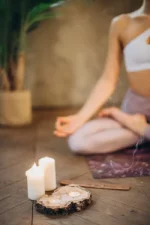
Yoga
Certain yoga poses elevate the legs above the heart promoting blood circulation.
You can try a yoga pose called “Viparita Karani” to improve blood flow.
Steps are:
- Lie down on your back. You can take a pillow for comfort
- Your back and legs should press against a wall and the sole should face upwards toward the ceiling
- Your body should be at a 90-degree angle to the floor
A mountain pose or “Tadasana” is a simple yoga asana that brings relief to varicose veins. It improves body posture and releases stress from the legs, ankles, and feet.
The yoga asana alleviates the heavy feeling in the legs and relaxes the muscles.
The asana is good for improving balance and blood circulation.
Steps are:
- Stand upright
- Your feet should be slightly apart about 2 inches
- Inhale and lift your arms slowly above the head
- Now look up and exhale
- After a few seconds bring your hands to the normal position and relax
Swimming
Swimming is an excellent low-impact cardiovascular exercise and is good for your overall health.
Floating alleviates the pressure in the veins and relaxes the muscles.
Leg lifts
Leg lifts can be done anywhere and do not require any special equipment.
Steps are:
- Lie down flat on the floor
- Lift one leg in the air and hold it in the same position for a few seconds
- Repeat this with your other leg
You can also do it while standing. Hold on to a stable object like a table. Slowly extend one leg. Repeat this process with your alternate leg.
Elevate the legs
This is a simple exercise and can be done anywhere in the office or even when you are lying down on the sofa.
Lie on the sofa or the bed, or simply sit on a chair. Elevate your leg in the air, keep it in this position for a few seconds, and bring it back. Repeat the process a few times.
Stop your suffering NOW
Don't just jump into a surgery because your doctor is advising you to go for it. Consult our doctors to know if you need a surgery at all. Rest assured, we WON'T recommend you surgery unless it's the last resort.