Overview
The unsightly, bulging veins that occur on the lower part of your body are varicose veins. They mostly occur in the lower legs, feet, and ankles.
They can be easily detected by the raised, rope-like, twisted veins that appear superficially under your skin. They are filled with blood and can be blue or purple in colour.
Sometimes varicose veins may not create any health issues but most people are embarrassed by their appearance and seek treatment for cosmetic concerns.
Though varicose veins are not a serious medical condition, if left untreated, they can worsen with time.
What are varicose veins and why do they occur?
Varicose veins are swollen, twisted veins that occur under the surface of the skin. They mostly develop in the lower part of the body. They occur when there is an increased blood pressure in the veins.
The veins allow the blood to flow in one direction to the heart.
The veins have one-way valves that prevent the blood from backflowing. If the veins are weakened and the valves are damaged, the blood flows back and is accumulated in the veins. This causes swelling in the veins.
Sometimes these veins can get clustered. They are blue and purple in colour and mostly occur due to prolonged sitting or standing which puts too much pressure on the legs.
Varicose veins are not necessarily a health hazard, however, there can be serious complications like blood clots, bleeding, or venous ulcers if the condition worsens and is not treated on time.
What are the first signs of varicose veins?
Some of the early signs that may hint that you have varicose veins are:
Feet swelling
If after a long day of work, your feet are swollen, it is one of the early signs that you may be at risk of developing the disease. If this symptom happens only once in a while, this may not be a warning sign. However, if your feet regularly swell after strenuous activities, it probably indicates varicose veins.
Red spots
Varicose veins mostly occur in the lower legs. If you notice some red spots on the legs, feet, and ankles, they indicate venous insufficiency.
Some of the varicose veins leak blood due to too much pressure on the veins.
Painful legs
If are experiencing leg cramps and muscle aches in your lower legs, especially after prolonged standing or sitting.
Dull pain in the legs after engaging in intense physical activities is an early sign of the disease. This occurs due to increased and prolonged pressure in the veins.
Regular leg cramps might be an early sign of varicose veins.
Shiny lower legs
Have you noticed an unnatural pigmentation or shine on the skin’s surface? You may also notice some discoloration, and itching, and the skin seems to peel. These are signs of varicose veins.
Dark veins
There are dark veins that are visible and very close to the skin’s surface.
Itchy legs
The area around the varicose veins is itchy. You may notice discolouration and flaky skin.

What happens when varicose veins are left untreated?
Some people believe that varicose veins are only a cosmetic nuisance which is not true. Varicose veins can get worse in the future and may cause serious complications.
Here are some of the complications you may develop if varicose veins are left untreated:
Poor blood circulation
Varicose veins mainly occur due to the poor blood circulation in the veins. If you are feeling exceptionally fatigued after physical exertion and have a throbbing sensation in your legs and feet, it is due to poor blood circulation.
Bleeding
If you have varicose veins, you may be vulnerable to bruises and cuts. Since varicose veins are pooled with blood and are very close to the skin’s surface, they may bleed profusely for minor cuts or injuries on the skin. This risk of bleeding may continue to exist until the swelling goes down.
Leg inflammation
Varicose veins occur when blood builds up causing excess pressure in the veins. You may feel tightening of the skin, skin tenderness, and discomfort. This condition can be very painful.
If the swelling is severe, the veins start leaking blood and they start oozing out of the skin’s surface. Some people may also notice skin hardening due to the increased pressure.
The skin gets discoloured and this requires immediate medical intervention.
Tired legs
Over time, varicose veins cause venous insufficiency and weaken the legs and your legs may feel tired more frequently.
Skin changes
Prolonged swelling may cause significant transformation in the skin.
The swollen tissue restricts the normal flow of blood and nutrients. The surrounding skin gets weakened and is less likely to heal properly for minor cuts, injuries, or infections.
Stop your suffering NOW
Don't just jump into a surgery because your doctor is advising you to go for it. Consult our doctors to know if you need a surgery at all. Rest assured, we WON'T recommend you surgery unless it's the last resort.
Medical conditions caused due to untreated varicose veins
Untreated varicose veins can cause more advanced health concerns.
Lipodermatosclerosis
Lipodermatosclerosis causes changes in skin colour, and skin hardening, and the legs are painfully inflamed. The affected area may be itchy, red, and tender.
Hyperpigmentation
You may notice dark and discoloured patches in some parts of the skin. Excess blood leaking causes hyperpigmentation.
Hyperpigmentation in varicose veins occurs due to valvular incompetence. The blood oozes out of the veins and the skin can get red, purplish, or bluish patches.
Skin ulcers
The skin can swell, crack, and form ulcers. The open wounds are susceptible to infection and are difficult to heal after minor cuts and bruises.
Skin infection
Open ulcers and sores are prone to infection and can cause damage to the surrounding tissues.
If you notice redness or warmth in the affected area, these are warning signs of infection.
Superficial thrombophlebitis
Superficial thrombophlebitis or superficial blood clots occur on the skin and can cause temporary blockage.
You may feel that the vein has hardened and pain. The skin is warmer in this area.
Deep vein thrombosis (DVT)
Deep venous thrombosis occurs when blood clots develop and block the deep veins. This can be life-threatening if the blood clots break out and travel to the lungs.
DVT requires immediate diagnosis and medical attention.
Varicose eczema
Varicose eczema is caused by chronic venous insufficiency (CVI). The symptoms of varicose eczema include:
- Dry, crusty skin
- The skin is thick
- Fluid-filled blisters that may ooze
- Inflamed skin is reddish-brown or violet-brown
- Leg swelling
- Pain on the skin
How are varicose veins diagnosed?
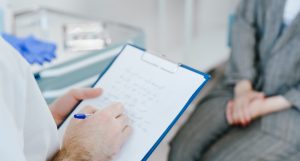
The vascular specialist will diagnose your physical symptoms and examine your legs and other affected areas.
The following questions will be asked:
- Whether you have a family history of varicose veins
- If you are pregnant
- Your BMI or body mass index
- Any history of previous leg injuries
- If you are suffering from DVT
A physical examination will check the following symptoms:
- Varicose veins with pain and swelling
- Itchiness and discomfort
- Heaviness in the legs especially after physical activities
- Skin conditions like venous eczema
- Painful and hard varicose veins causing blockage
- Unhealed leg ulcers
The doctor may recommend a Doppler ultrasound test. It is a non-invasive test that uses high-frequency sound waves to look into the veins and examine their valves and blood flow.
After the diagnosis, the doctor will suggest a suitable treatment for your condition.
Final words
Treatment for varicose veins depends on disease progression, overall health, and symptoms.
Varicose vein symptoms can be managed at home by maintaining a moderate weight, wearing loose clothes, low-impact exercises, and reducing salt in your daily diet.
Many of us ignore varicose veins simply as unsightly veins that appear superficially on our skin. Varicose veins can cause potential risks if left untreated for too long.
Even though you are not experiencing any pain or discomfort, it is best to consult a doctor and seek medical intervention.
References